Italy · Mains
Ossobuco alla milanese.
Veal shanks slowly braised in white wine and broth until fork-tender, finished with fresh lemon gremolata. The Milanese way, without tomato.
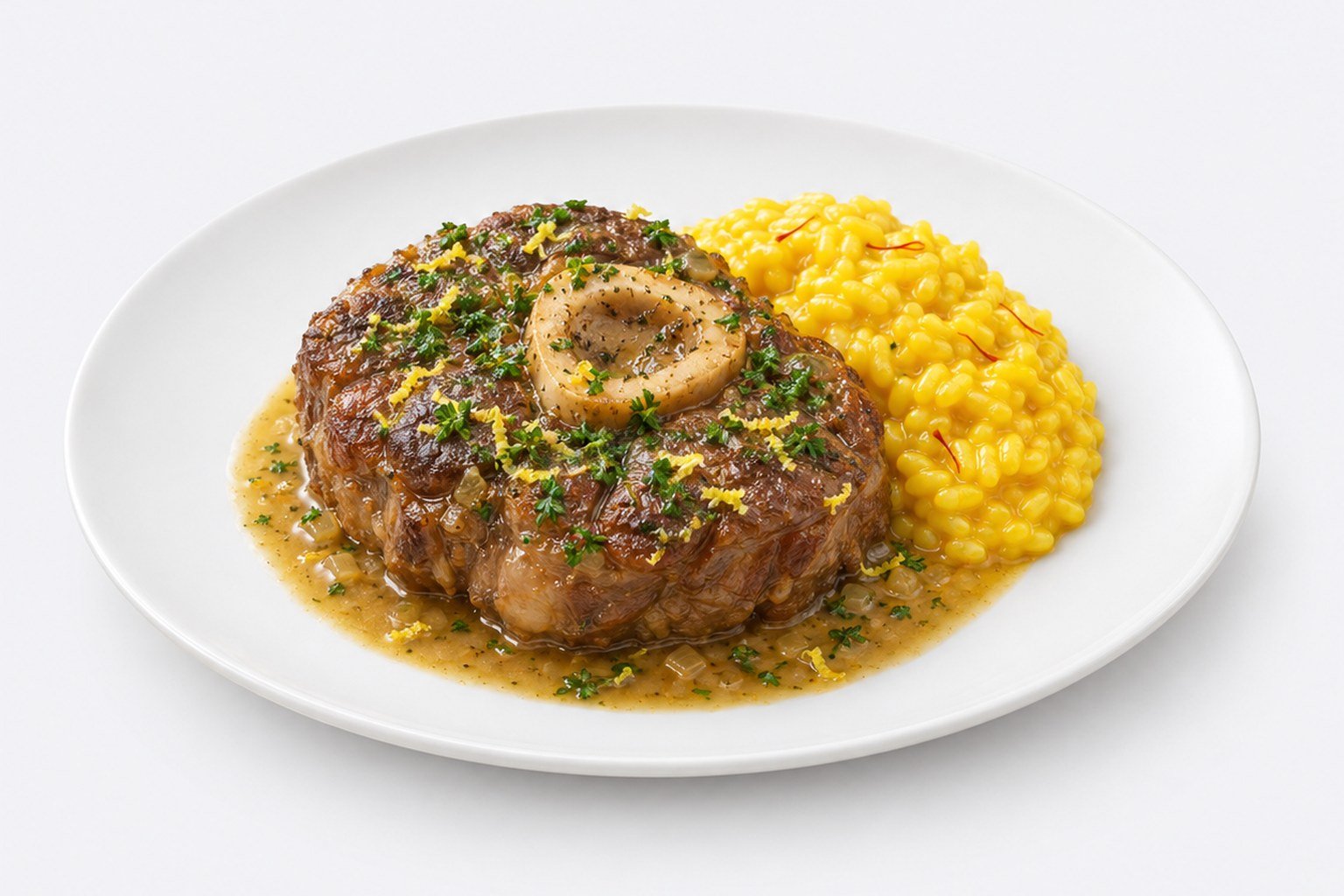
Illustration created with AI
The story of osso buco.
Ossobuco means “bone with a hole”. The name comes from the cut itself: a thick slice of veal shank with a round bone in the center, filled with marrow. In Milan, the marrow is the prize, scooped out with a small spoon and eaten with the meat.
The traditional Milanese version is cooked “in bianco”, with butter, white wine and broth, and no tomato. The tomato version came later and became famous abroad. At the end, Milanese cooks add gremolata, a fresh mix of lemon zest, garlic and parsley, and serve osso buco next to a plate of golden saffron risotto: one of the few times in Italy when rice and meat share the same plate.
Origin: Lombardy, Italy
Where to find the ingredients in the US.
- Veal shanks: ask the butcher for center-cut veal shanks, about 1½ inches (4 cm) thick, with the marrow bone in the middle. Many supermarkets sell them frozen.
- Broth: a low-sodium beef or chicken broth works well; homemade is even better.
- Wine: any dry white wine you would drink, such as Pinot Grigio or Soave.
Three steps. That’s it.
What each stage should look like.
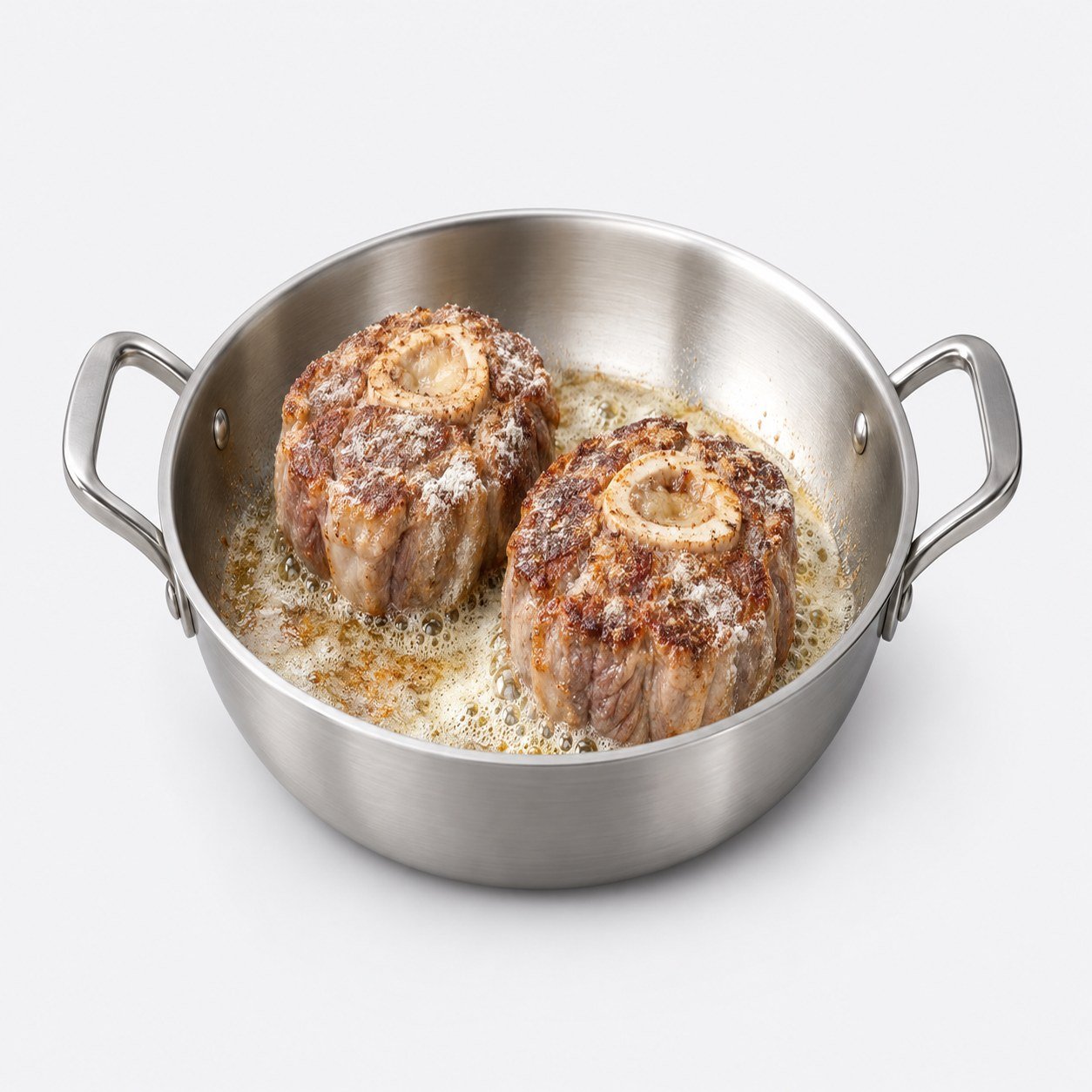
Step 1
Brown the shanks.
Dust the shanks lightly with flour and brown them in butter on both sides.
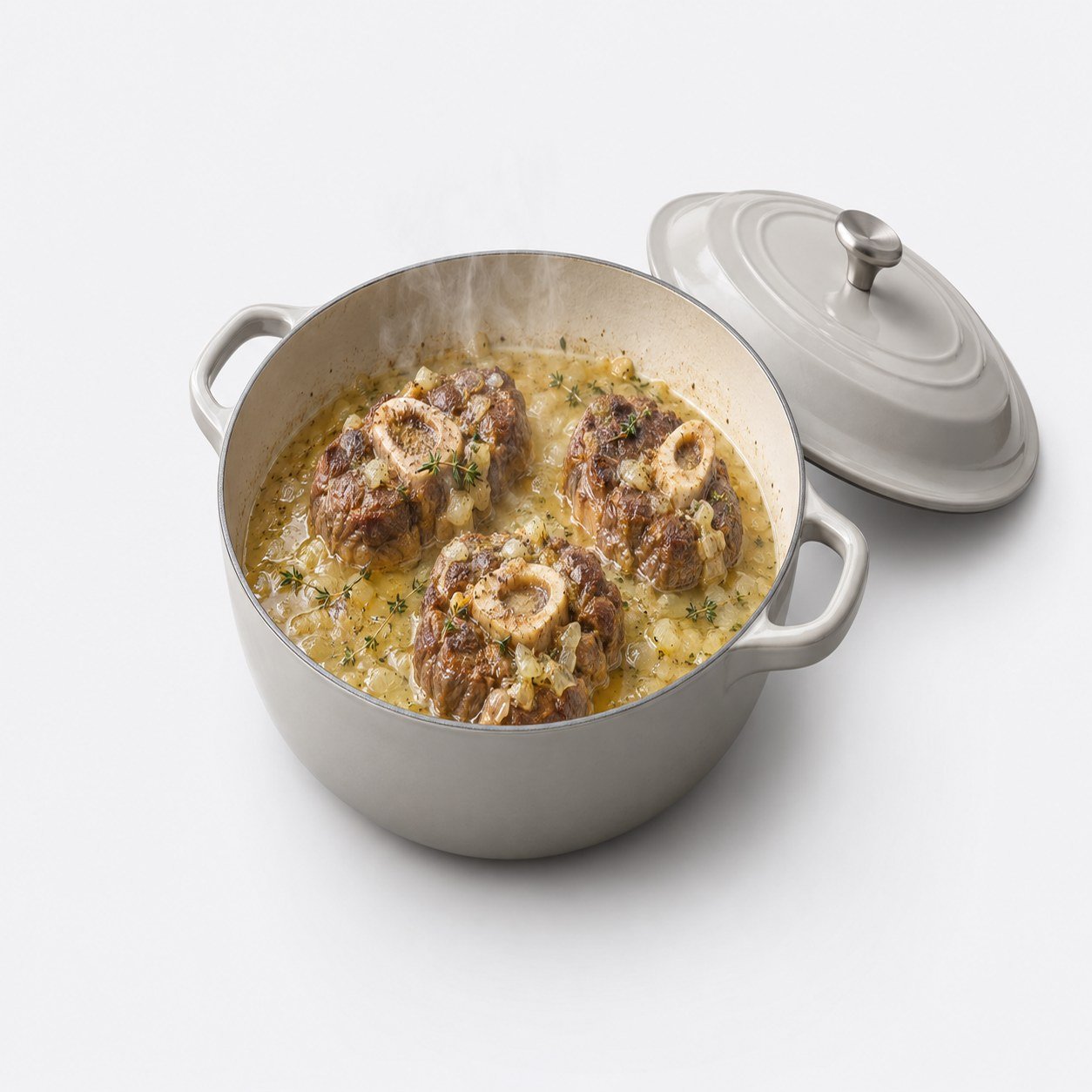
Step 2
Braise slowly.
Add wine, let it bubble, then broth, and simmer covered for about two hours.
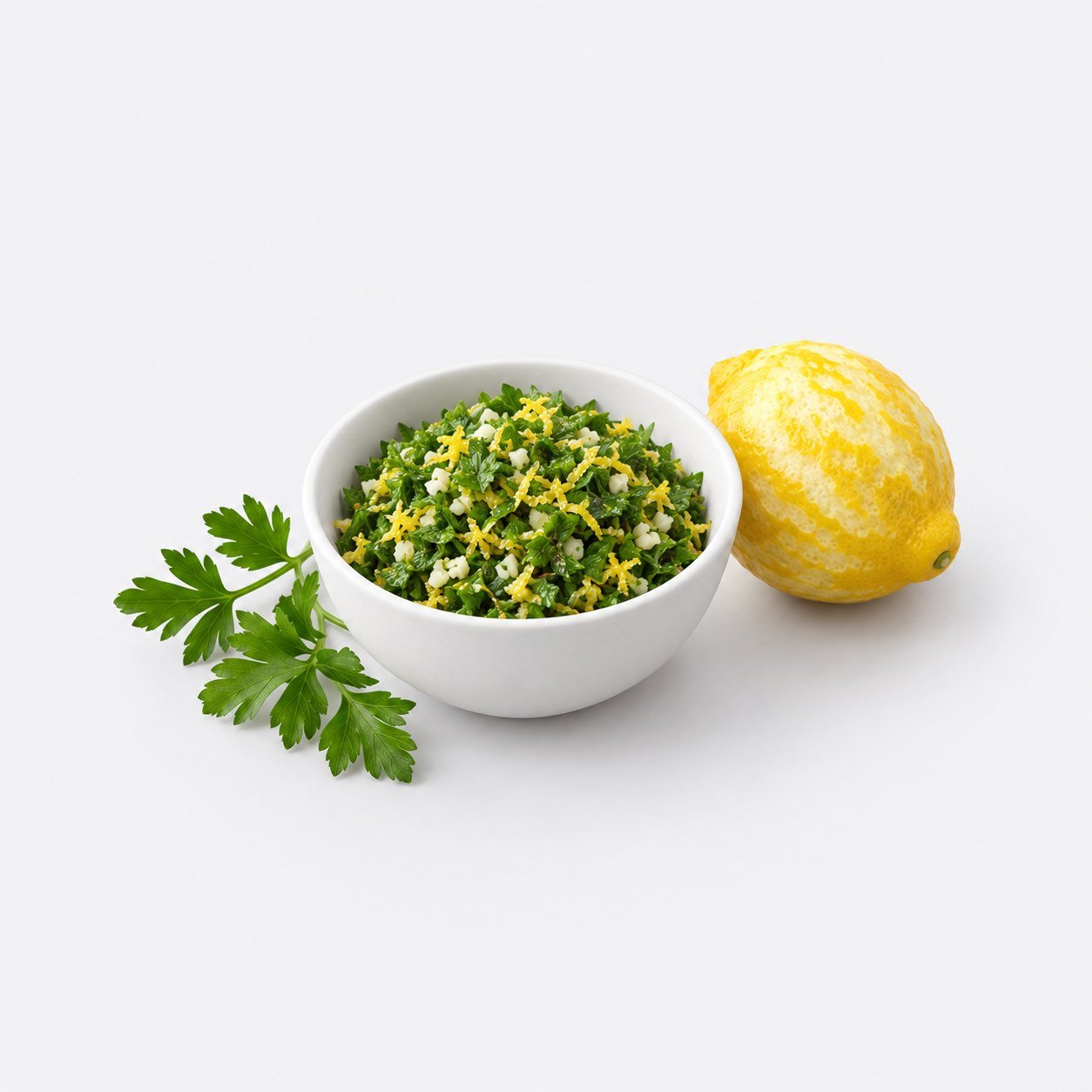
Step 3
Finish with gremolata.
Sprinkle lemon zest, garlic and parsley over the meat just before serving.
Illustrations created with AI
Recipe
Ossobuco alla milanese.
Prep 20 min · Cook 2 h · Total 2 h 20 min
Ingredients
- center-cut veal shanks, about 1½ inches (4 cm) thick, 2.5 lb (1.2 kg) in total
- all-purpose flour, for dusting
- unsalted butter
- extra-virgin olive oil
- small yellow onion, finely chopped
- dry white wine
- beef or chicken broth, hot, plus more if needed
- salt and black pepper
- organic lemon, zest only (for the gremolata)
- garlic, very finely chopped (for the gremolata)
- fresh parsley, finely chopped (for the gremolata)
Instructions
- With scissors, make two or three small cuts in the thin membrane around each shank, so they stay flat while cooking. Season with salt and pepper and dust lightly with flour, shaking off the excess.
- Melt the butter with the oil in a wide, heavy pan that holds the shanks in one layer. Brown them over medium-high heat for about 4 minutes per side. Set them aside.
- Lower the heat, add the onion and cook gently for 5 minutes, until soft. Return the shanks to the pan, pour in the wine and let it bubble for 2–3 minutes.
- Add the hot broth until it comes about halfway up the meat. Cover and simmer on very low heat for 1½–2 hours, turning the shanks carefully every 30 minutes and adding a little broth if the pan gets dry. The meat is ready when it pulls easily from the bone.
- While the meat cooks, make the gremolata: chop the lemon zest, garlic and parsley together until very fine.
- Uncover, let the sauce reduce for a few minutes if it is thin, then sprinkle the gremolata over the shanks, cook 1 more minute and serve with the sauce spooned over, ideally next to saffron risotto.
What you’ll need.
Wide heavy pan with lid.
Big enough to hold the shanks in a single layer.
Microplane zester.
For lemon zest without the bitter white pith.
Marrow spoon or small teaspoon.
For the best bite of the dish.