Italy · Pasta & noodles
Spaghetti all’amatriciana.
Guanciale, tomato and Pecorino Romano. No onion, no garlic: the original from the town of Amatrice.
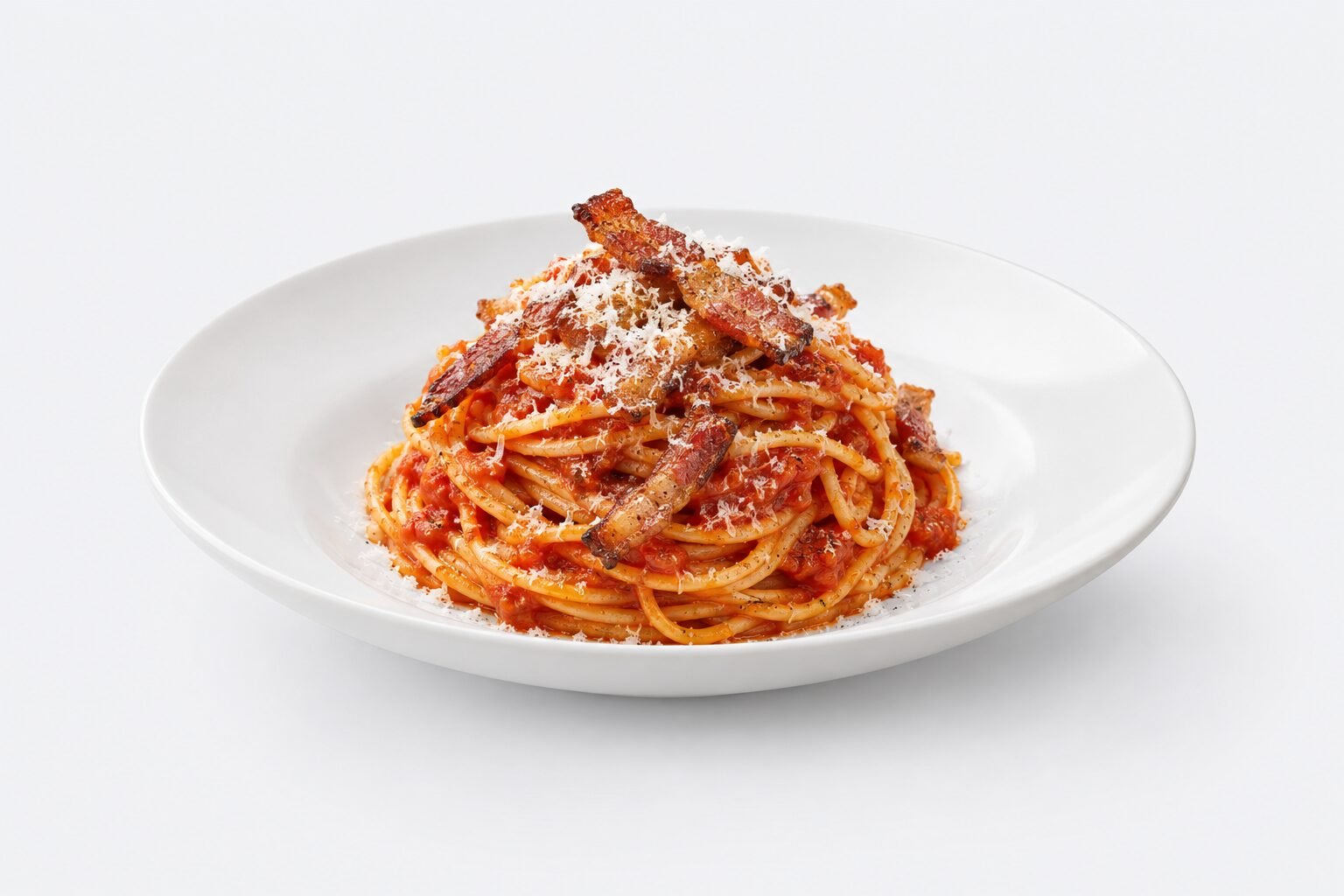
Illustration created with AI
The story of amatriciana.
Amatriciana comes from Amatrice, a small mountain town between Lazio and the Abruzzo hills. Shepherds made a white version, called gricia, with guanciale and Pecorino; when tomatoes arrived in Italian kitchens, the red amatriciana was born.
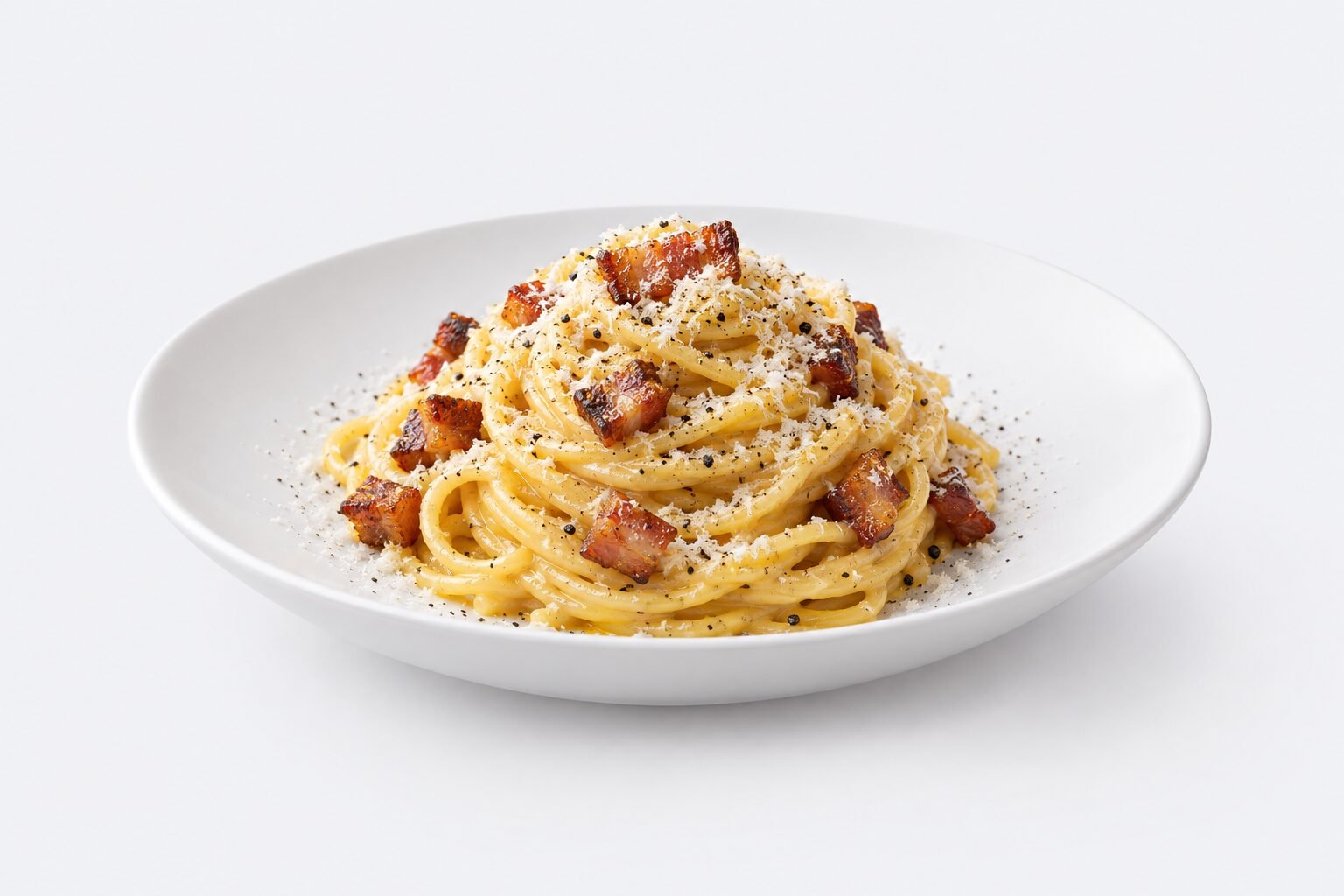
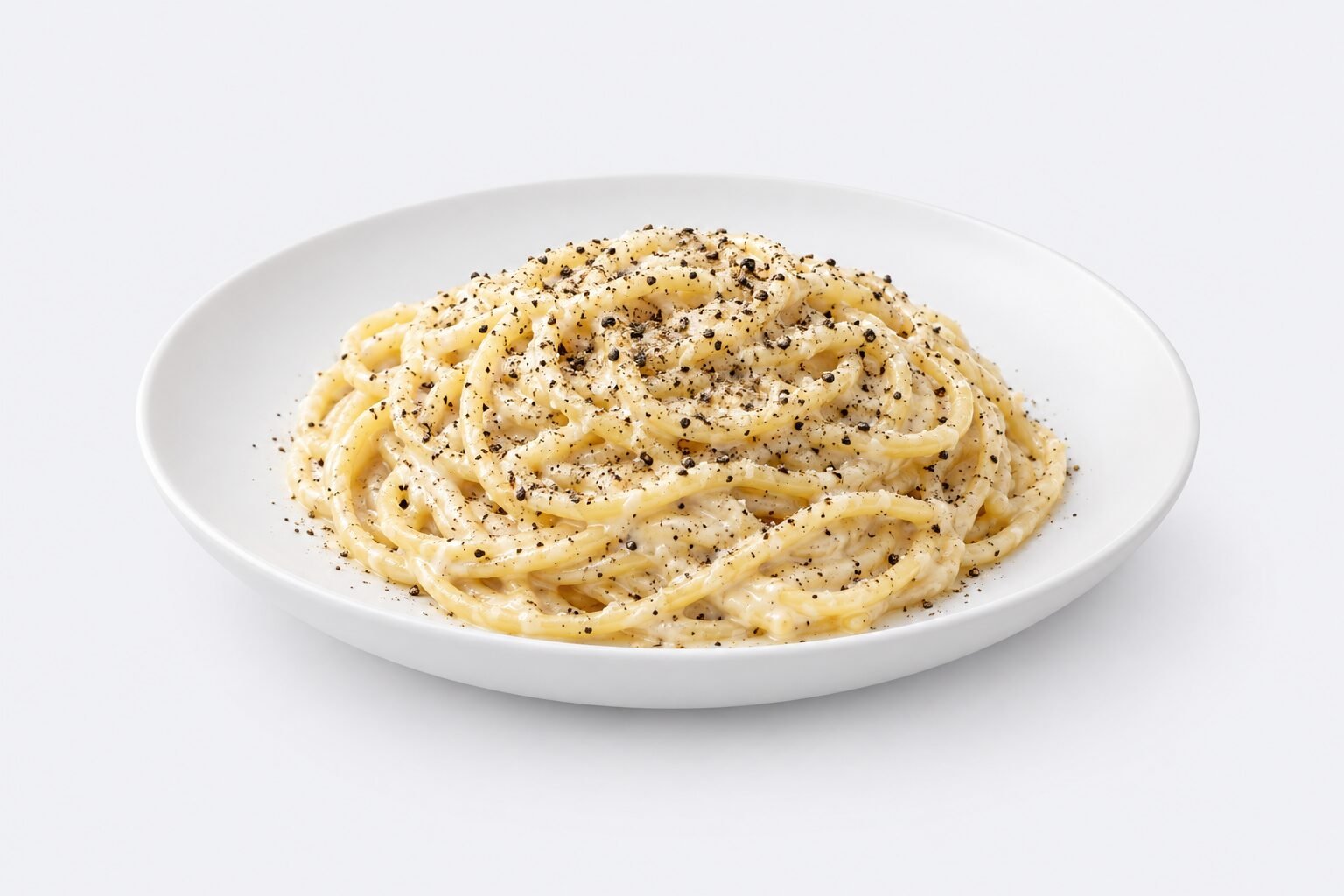
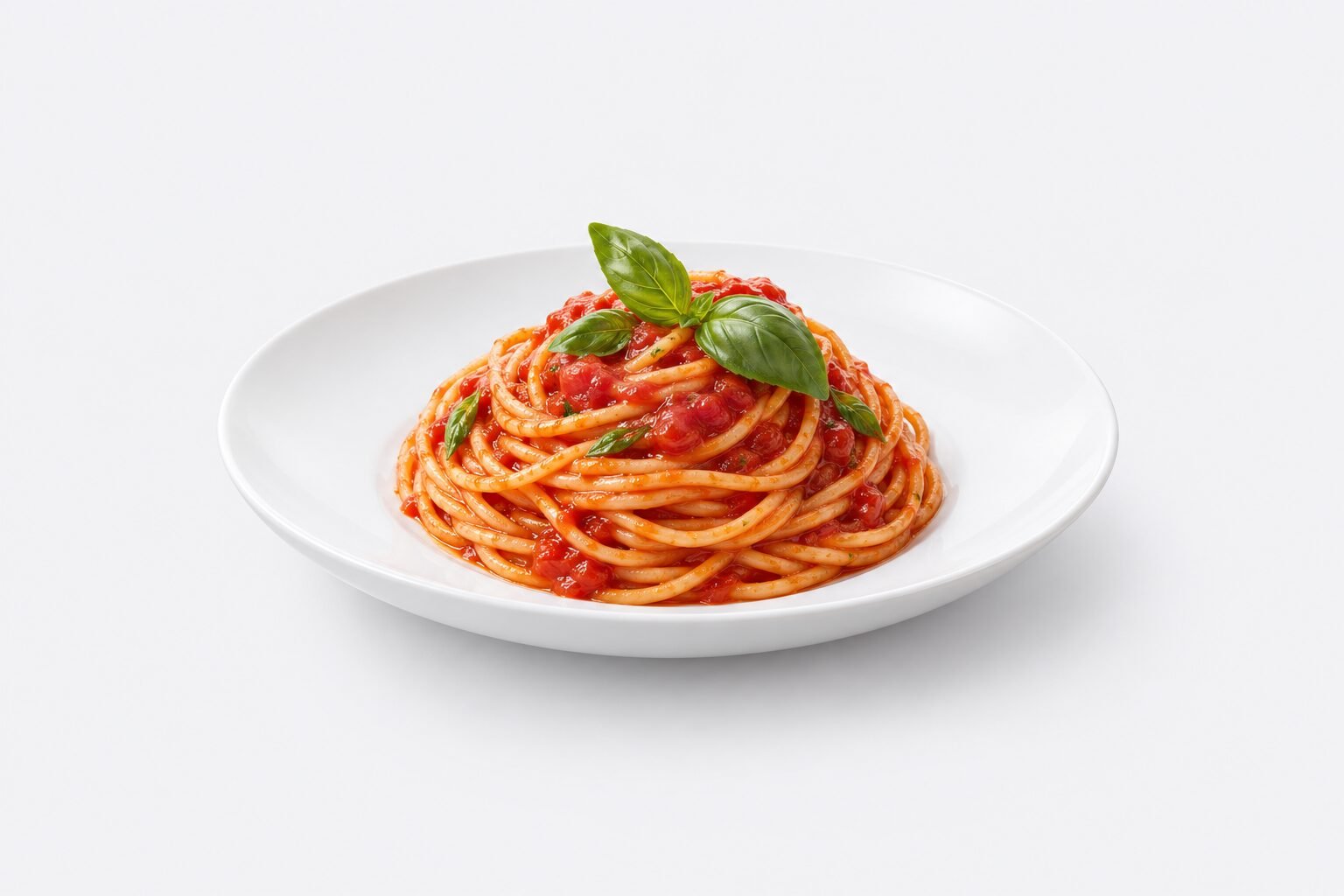
Today it is one of the four great pastas of Rome, with carbonara, cacio e pepe and gricia. The town of Amatrice protects its recipe: guanciale, Pecorino, tomato, a splash of white wine, black pepper or chili. No onion, no garlic. In Amatrice they use spaghetti; in Rome, bucatini.
Origin: Lazio, Italy
Where to find the ingredients in the US.
- Guanciale: cured pork cheek, at Italian delis and online. Pancetta is the closest substitute, but say so if you use it.
- Pecorino Romano: the sharp sheep’s milk cheese from Italy, sold in most supermarkets.
- Tomatoes: canned whole peeled Italian tomatoes, crushed by hand.
Three steps. That’s it.
What each stage should look like.
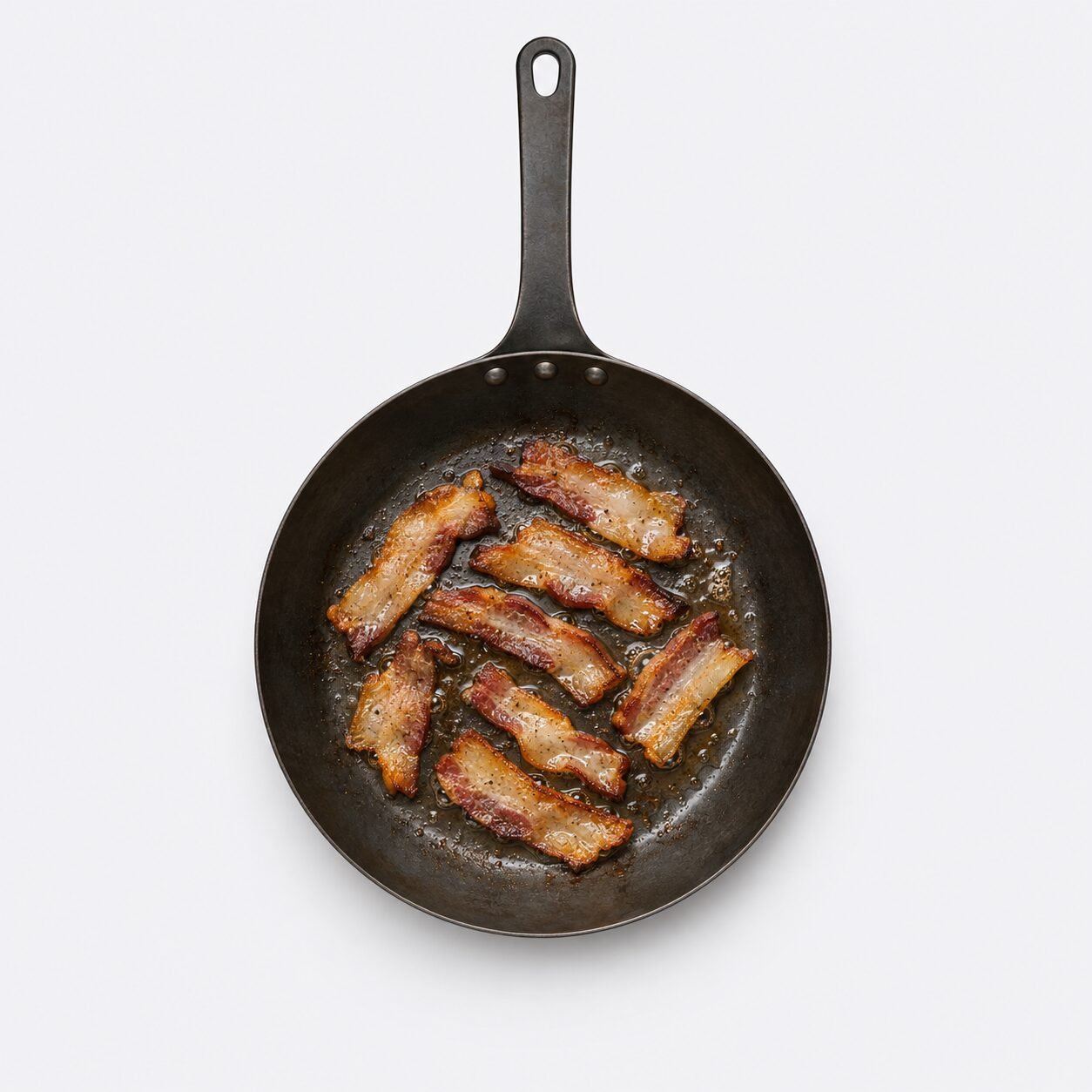
Step 1
Render the guanciale.
Cook the strips slowly in a dry pan until golden and crisp at the edges.
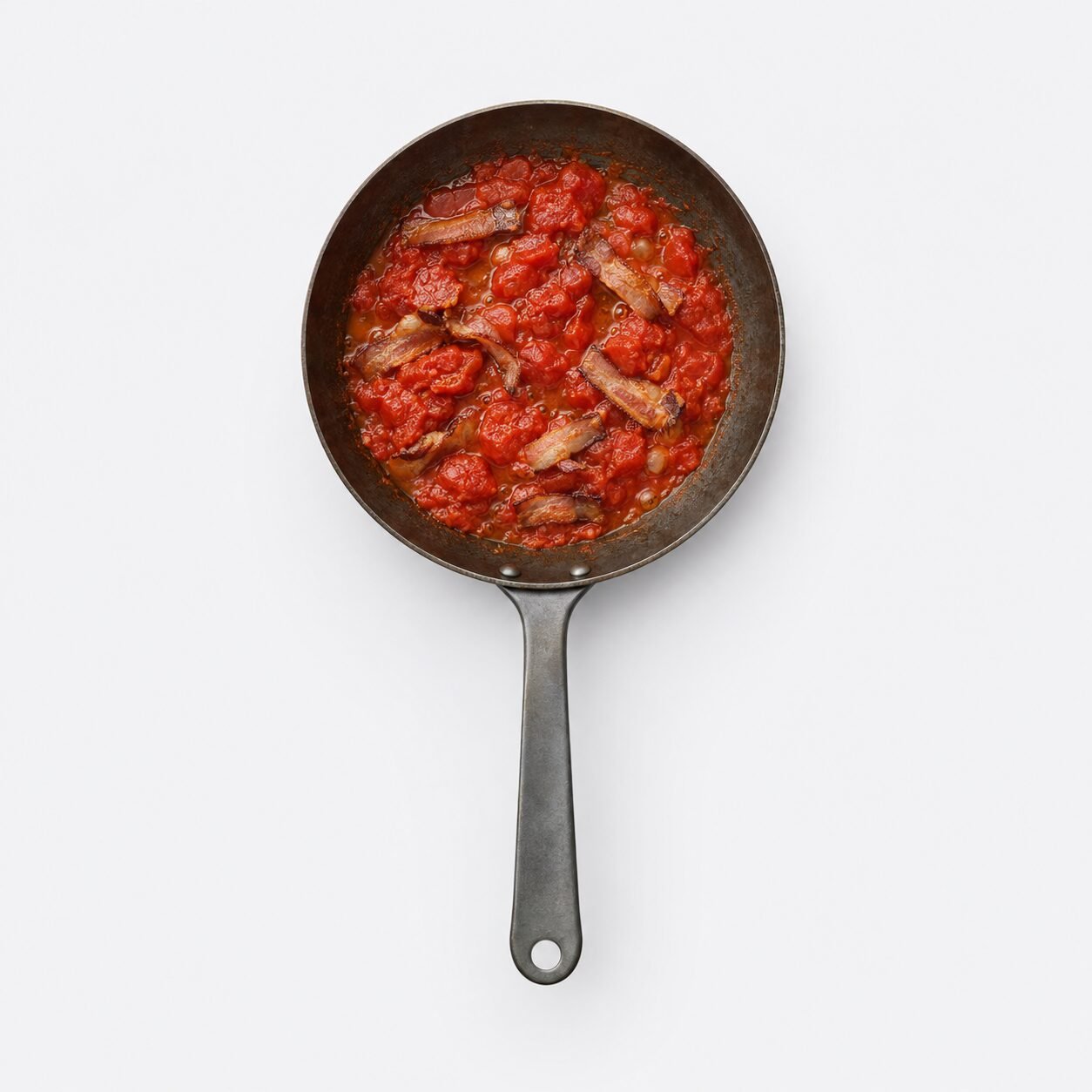
Step 2
Add the tomato.
Deglaze with white wine, then simmer the tomatoes in the guanciale fat.
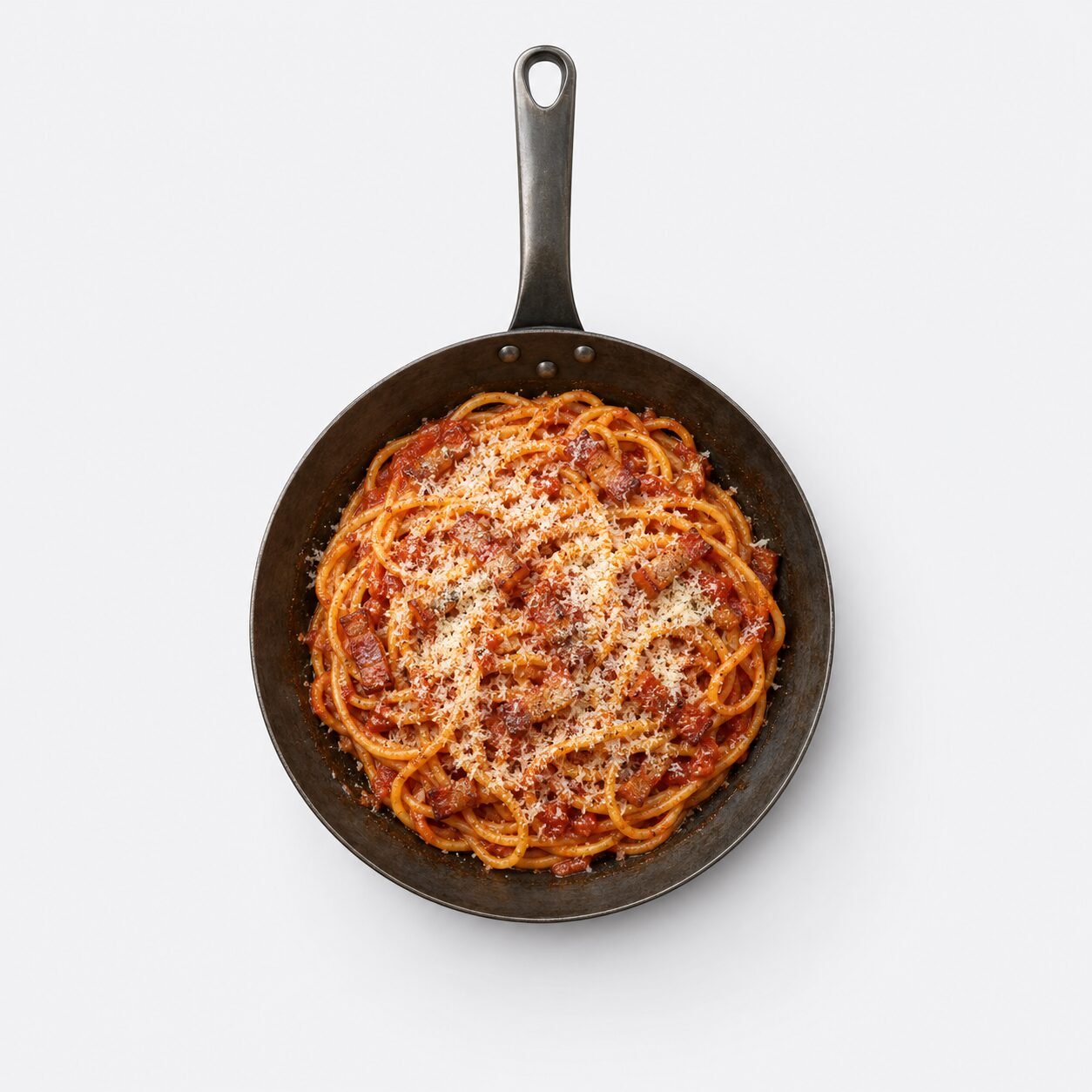
Step 3
Toss with Pecorino.
Toss the spaghetti in the sauce, off the heat, with plenty of Pecorino.
Illustrations created with AI
Recipe
Spaghetti all’amatriciana.
Prep 10 min · Cook 25 min · Total 35 min
Ingredients
- spaghetti or bucatini
- guanciale, cut into strips
- dry white wine
- canned whole peeled tomatoes, crushed by hand
- dried chili flakes (optional)
- Pecorino Romano, grated
- salt and black pepper
Instructions
- Bring a large pot of water to a boil and salt it lightly: guanciale and Pecorino are already salty.
- Put the guanciale in a cold pan, ideally iron or steel, and turn the heat to medium-low. Cook for 8–10 minutes until golden and the fat is rendered. Add the chili, if using.
- Pour in the wine and let it evaporate. Take out half of the guanciale and keep it aside, so it stays crisp.
- Add the tomatoes and a pinch of salt and simmer for 10–12 minutes, until thick.
- Cook the pasta until 1 minute short of al dente. Transfer it to the sauce with a splash of pasta water and toss over the heat for 1 minute.
- Off the heat, add the Pecorino and the reserved guanciale, toss and serve with more Pecorino and black pepper.
Sources consulted: Gambero Rosso. Our own text, with US and metric measurements.
What you’ll need.
Carbon steel or iron pan.
Renders guanciale evenly and gives it a good color.
Box grater.
For freshly grated Pecorino Romano.
Pasta pot with insert.
Makes moving the pasta to the pan easier.